App Store keyword rank tracking that lives on your Mac, not on someone else's server.
RankMast checks your keywords once a day and keeps every result in a database on your Mac. No account, no server, nothing uploaded.
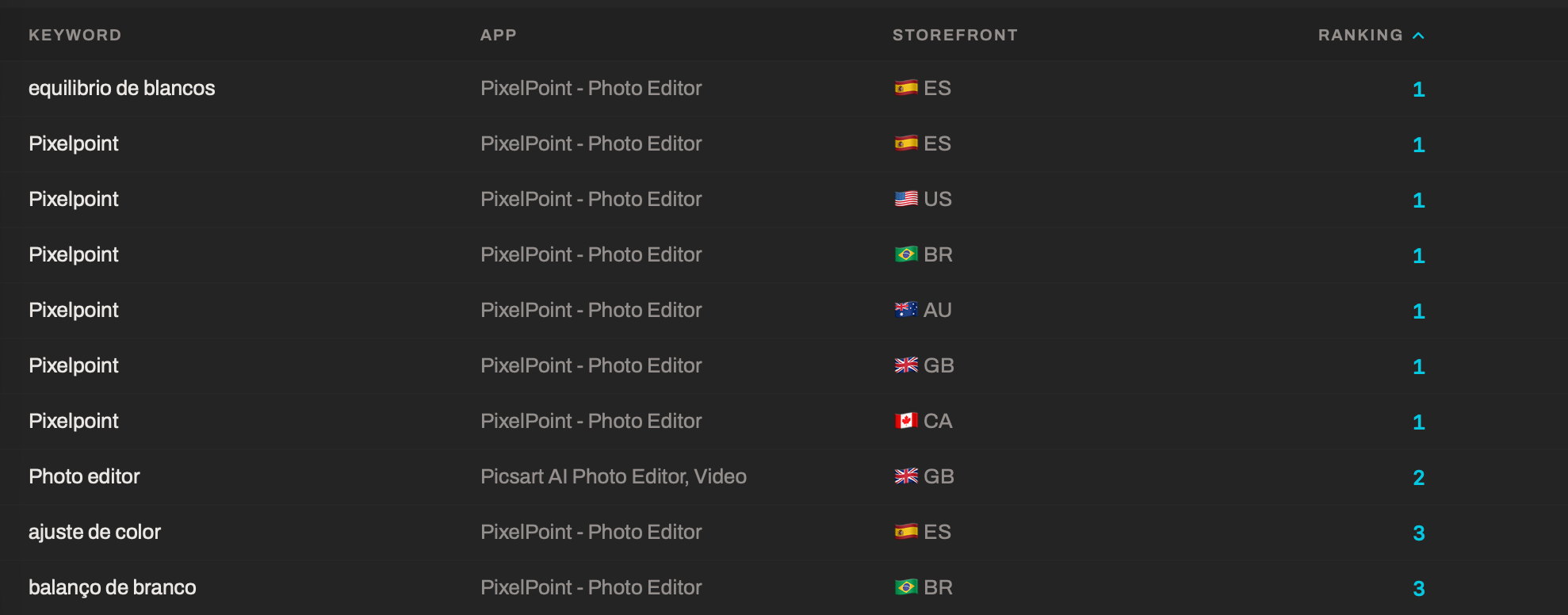
The Keywords table: one row per keyword and storefront, each tracked on its own.
Everything you track, on one screen
Screen 1 of 6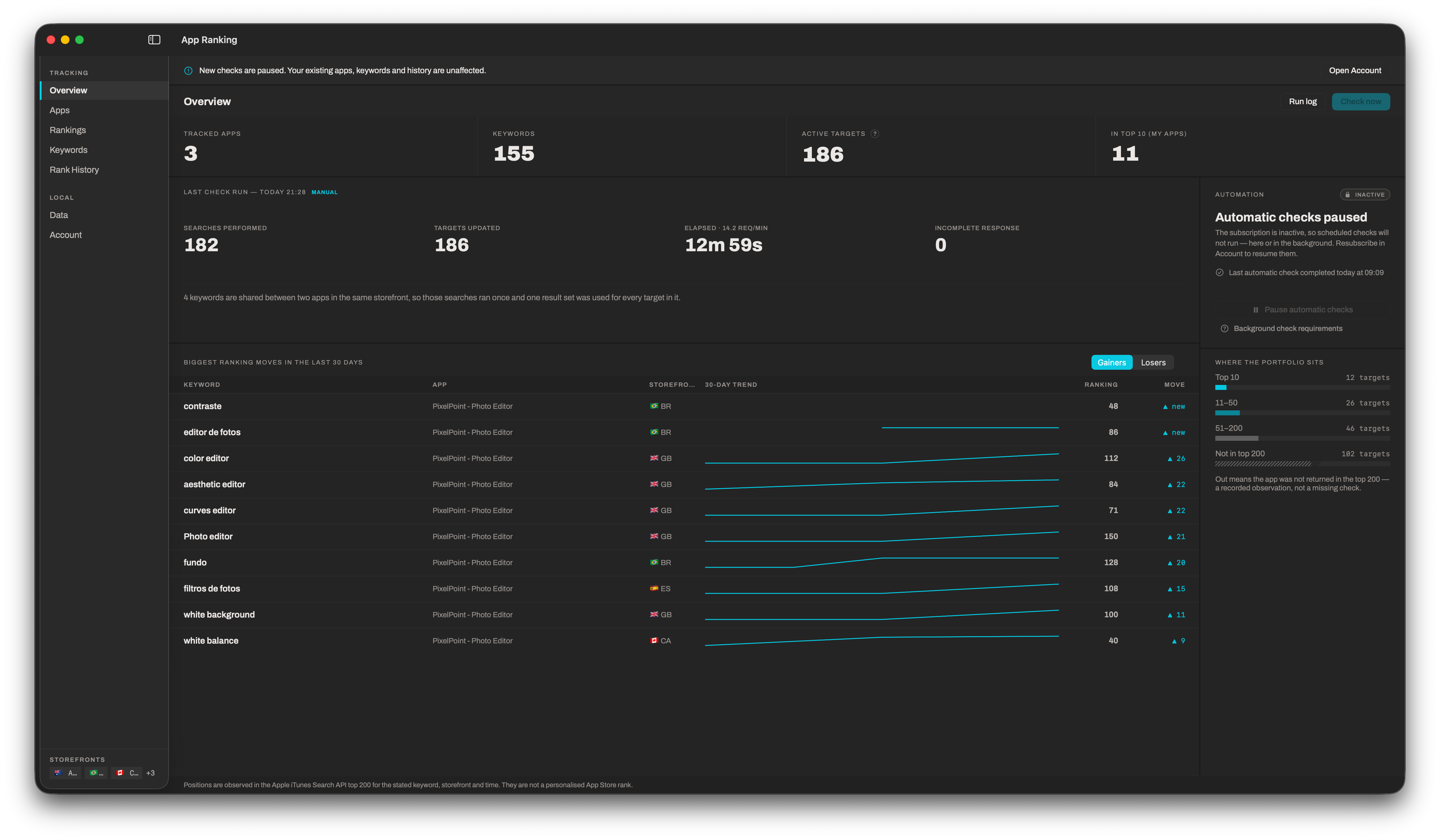
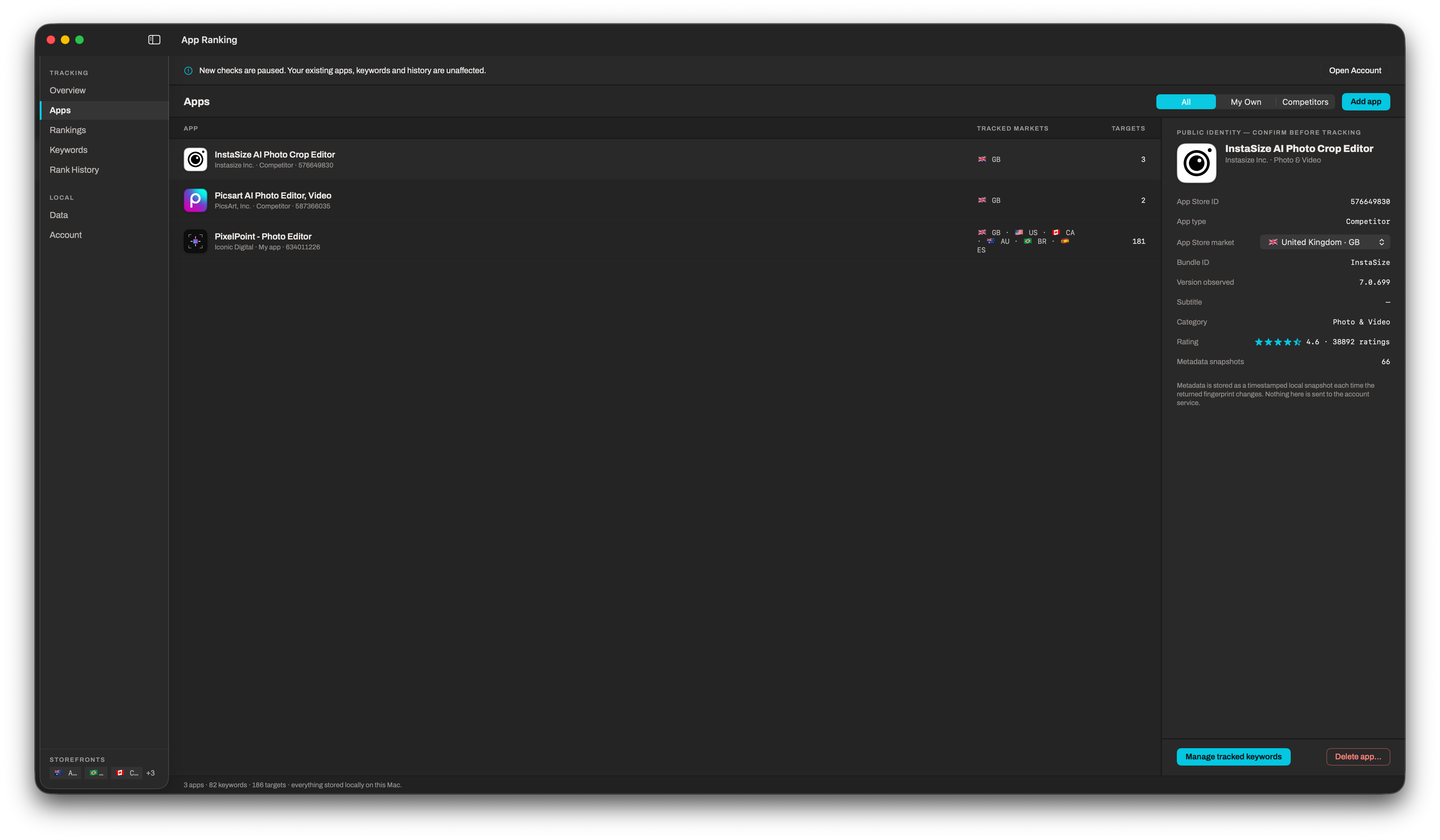
Add any app — yours or a competitor's
AppsPaste an App Store ID and RankMast shows you what the store returns: market, bundle, version, category and rating. Check it's the right app, mark it as yours or a competitor, and add it. From then on, every metadata change is saved as a dated snapshot on your Mac.
It never tells you more than it measured.
Most rank trackers give you a number and leave you to assume it's true. RankMast tells you what it actually saw, and when it doesn't know, it says so.
An observed position
Every number is a position RankMast saw in the Search API top 200. Not an estimate, not a model, not a blended score.
Outside the window
Not 200, not 0, not a stand-in number. The chart leaves a gap rather than invent a point.
A check that failed
If a check fails, stalls or gets rate-limited it says so, and it won't overwrite a real rank. Your last good position stays on screen, labelled as such.
Movement, stated
Today against the last conclusive check: ▲n, ▼n, level, newly ranked or dropped out. That's all it claims.
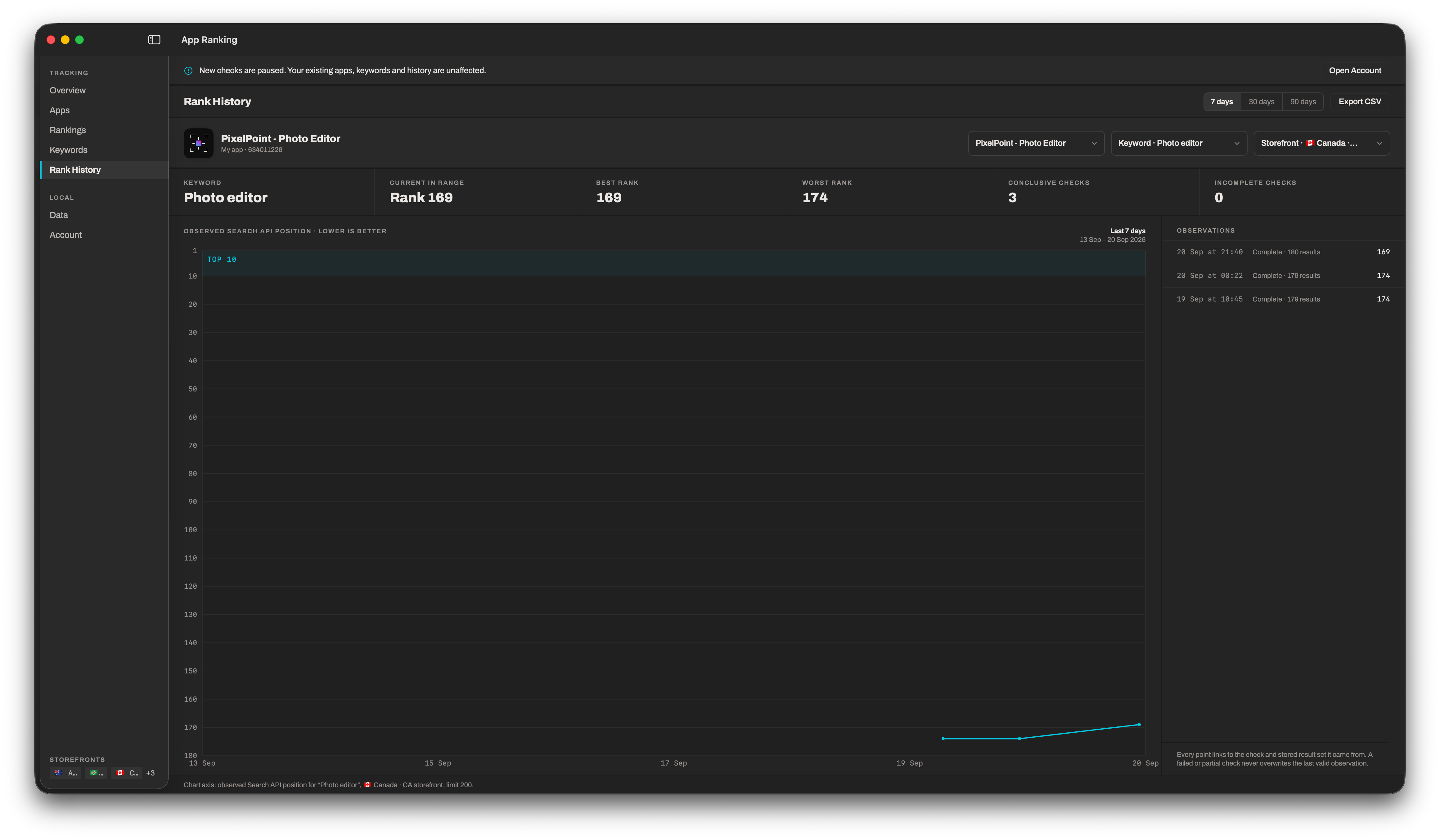
Every point links back to the check that produced it
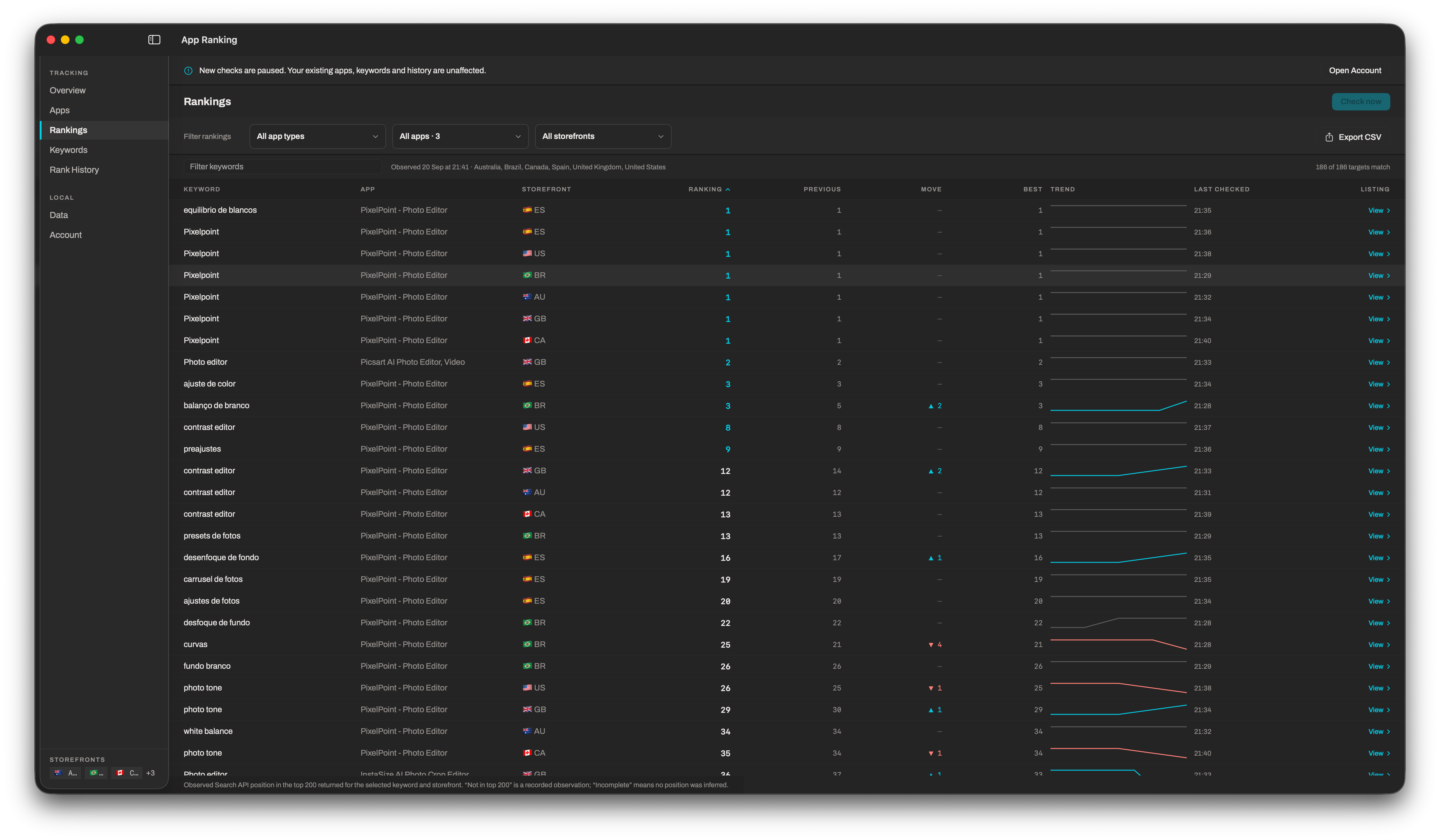
Keywords · HistoryEvery keyword, every storefront, one table
See everyone who ranked above you
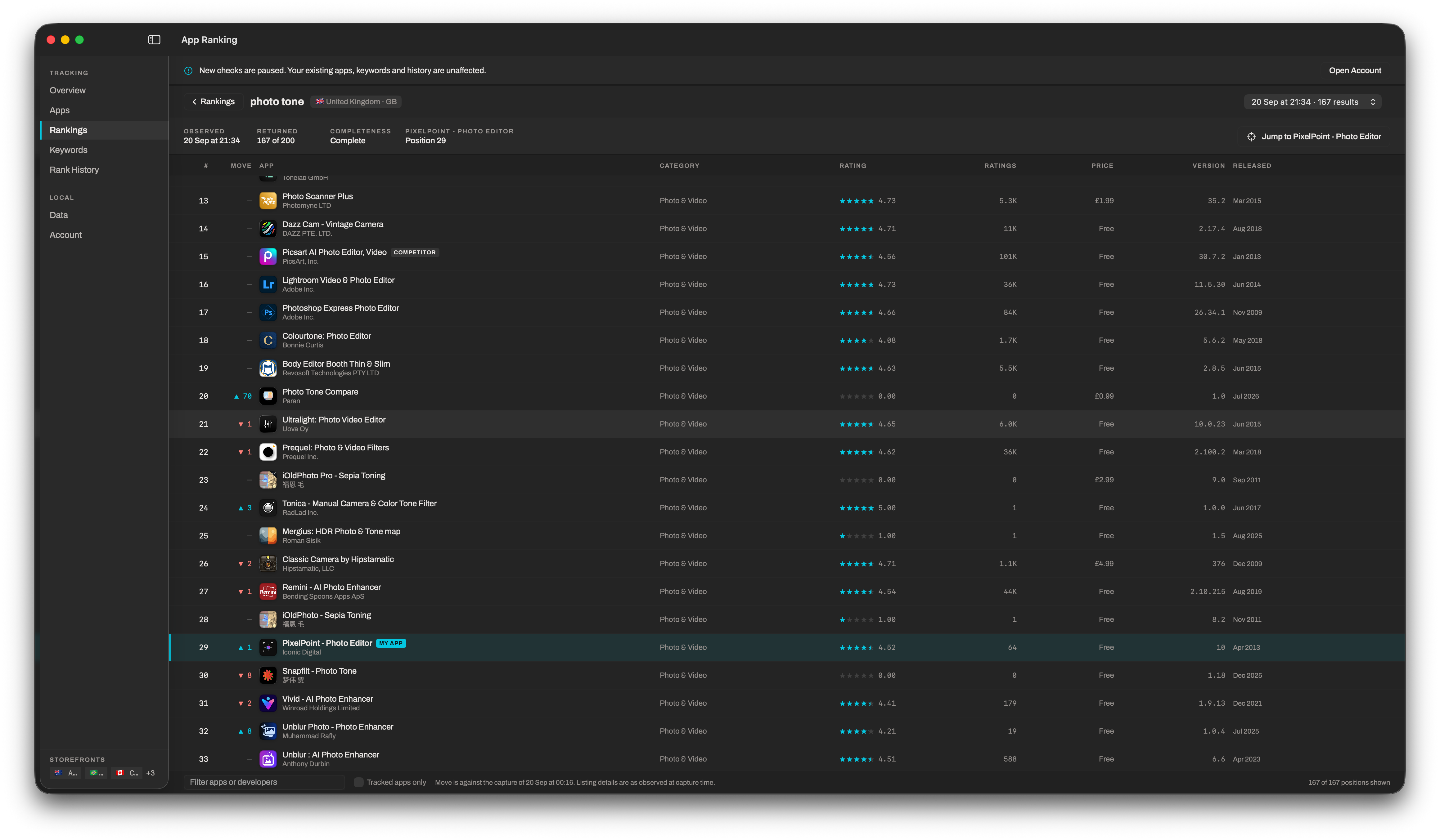
Watch a keyword move over time
How it works
Add an app
Paste a numeric App Store ID. RankMast looks it up with Apple and shows you the name, developer and icon it found, so you can check you've got the right app before you commit.
Choose storefronts
Pick the countries you sell in from Apple's storefront list. Each is tracked on its own, so two storefronts give you two separate series rather than one average.
Add keywords
Type the search terms you want to watch. Adding apps, storefronts and keywords costs nothing against your limits.
Checks run daily
There's no schedule to set up. Each day's work falls due at the start of the day and runs at the first chance it gets. If the app is closed, a small background helper wakes up, does it and quits.
Read the result
Current position, previous, movement, best ever, how many checks there have been and how the last one went. Plus the full chart for any app, keyword and storefront.
Six screens
That's the whole app.
Overview
How the last run went: searches performed, targets updated, time taken and anything incomplete. Plus the biggest mover since the last check, how your apps spread across storefronts, when the next run is due, and a Check now button with live progress.
Apps
Your apps and your competitors', with developer, App Store ID, storefronts and target counts. Add one by ID, change its storefronts, or remove it.
Keywords
The current-ranks table: keyword, app, position, previous, movement, best, check count and state. Filter by app and storefront, add or archive keywords, turn targets on and off.
History
The rank chart with 1 at the top, for one app, keyword and storefront over any date range. Current, best and worst above it, every observation listed below, CSV export whenever you want it.
Data
Where the database and backups sit on disk, how big they are, and what schema they're on. Back up, restore, export to CSV, choose how much history to keep, or move the lot to the Trash.
Account
Your subscription, renewal date, purchase and restore, and a plain statement of what a rank here does and doesn't mean.
Everything stays on this Mac.
No account, no sign-in, no server holding your data. Every rank sits in one SQLite database in your own container. Your keywords, your App Store IDs, your ranks and your history never leave the machine.
See where your data lives, and back it up
DataThe Data screen shows you the real paths to your database and backups, and opens them in Finder. Back up or restore in a click, export to CSV, and decide how much history to keep: all of it, the last N days, or everything after a date you pick. Pruning leaves your apps, keywords and targets alone, and always keeps each target's most recent conclusive result. Deleting is one deliberate action that moves the files to the Trash. Nothing else ever touches them.
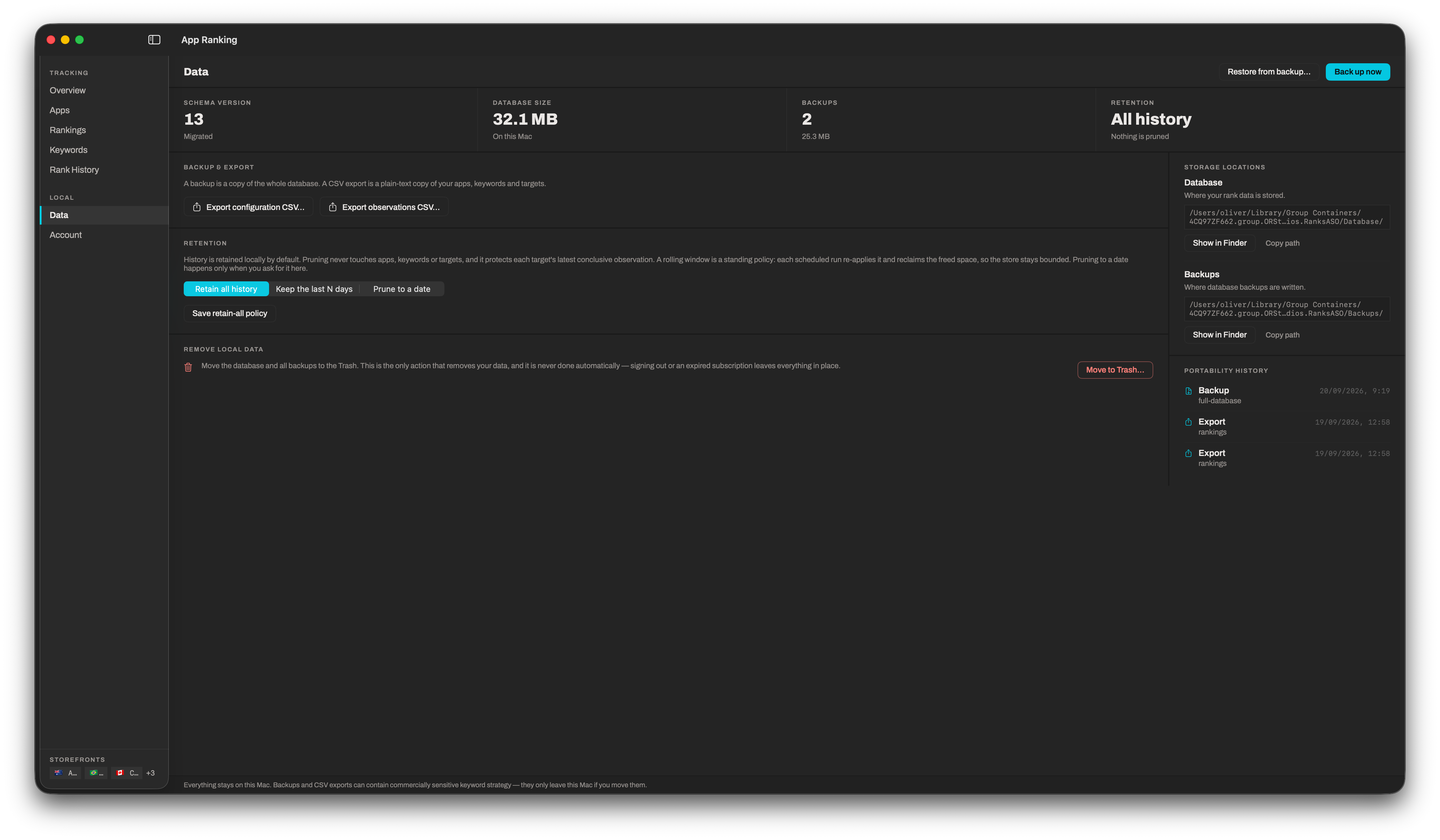
It's your file. Back it up, export it, delete it.
Backup and restore
Back up and restore from the Data screen, which also tells you where the files are and how much space they take.
CSV export
Export your setup and your observations, or pull a single history series straight off the chart.
Retention you choose
You decide how much history to keep, and the default keeps all of it. Removing data takes a deliberate click and goes via the Trash.
Your history is yours to keep
Whatever happens to your subscription, the data already on your Mac stays readable, chartable and exportable. None of it gets locked away.
What it doesn't do
Worth knowing before you put your keywords in.
Top 200 only
Positions come from Apple's public Search API, which returns 200 results. Below that, all RankMast can tell you is that you're not in the top 200.
No promised minute
macOS holds back background work when the Mac is asleep, offline or busy. RankMast tells you when a check actually ran instead of promising a time it can't keep.
One daily cadence
One automatic check a day, plus Check now whenever you want one. No hourly polling.
Have a question?
Send a note and Oliver will get back to you.
Thanks — your message has been sent.